
Body language as integral part of human communication
The Silent Impact of Body Language
People move when they talk. We often unconsciously support words and thoughts with -sometimes even minimal- movements. We can't talk without moving! Physical communication is a source of information to which we respond, consciously or unconsciously. Body language plays a crucial role in human communication. Even when we are not speaking, our posture, gestures, and facial expressions send powerful signals that shape how others perceive us. Whether we are building trust, participating in a job interview, or navigating traffic, non-verbal communication often speaks louder than words.
Body language plays a crucial role in communication and rapport-building. Understanding and utilizing nonverbal cues can enhance our ability to connect with others, convey confidence, and build trust. By reading and responding to body language effectively, we can become more skilled communicators.
Trust is deeply influenced by what we observe rather than what we hear. Open posture, steady eye contact, and relaxed facial expressions can make others feel respected and safe. Conversely, crossed arms, avoidance of eye contact, or restless movements can create doubt, even if the spoken message is positive. Because trust develops through consistent and congruent behavior, aligning body language with genuine intentions strengthens interpersonal connections.
In a job interview, body language can significantly impact first impressions and overall evaluation. A confident handshake, an upright posture, and attentive listening show professionalism and confidence. Interviewers often look for non-verbal cues that suggest enthusiasm, reliability, and the ability to communicate effectively. On the other hand, slouching, fidgeting, or looking around the room can unintentionally signal disinterest or insecurity.
Even in traffic, body language influences safety and cooperation. Drivers, cyclists, and pedestrians frequently rely on non-verbal cues—such as eye contact, hand signals, or assertive yet predictable movement—to understand one another’s intentions. A simple nod or gesture can prevent misunderstanding and reduce conflict.
Behind the Silence: Body Language as Communication Science
Expertisecentrum Lichaamstaal Nederland (ELN) is the leading authority in the Netherlands on body language and non-verbal communication.
The centre provides high-quality analyses, inspiring keynotes, and hands-on training based on empirical research and multidisciplinary insights from neuroscience, communication science, psychology, and movement studies.
ELN developed the online Practitioner Program—a focused, five-session course designed for professionals (English, Dutch, French) who want to understand and use body language more effectively. This program brings clarity and structure to non-verbal behaviour in conversational settings, making the dynamics of physical interaction fully transparent. The Practitioner Program delivers a powerful tool and immediately applicable insights that significantly enhance communication skills and strengthen professional performance.
"If we really want to understand the other person, understanding their body language is essential"
ELN offers a scientifically based knowledge about body language, used in many different fields such as healthcare, police, education, coaching, etc. The study is founded on neurosciences, communication sciences, kinesiology and psychology.
Expertise Center for Body Language Netherlands (ELN) was founded in 2016 after commotion about the scientific nature of synergology in the U.S.and Canada.
Extensive research into facial micro-expressions by Paul Ekman taught us that a micro movement usually lasts a fraction (1/10) of a second and occurs when the individu is trying to contain or maintain emotional response. Since the nerve impulse has already been released and cannot be reversed, it escapes as a micro-expression.
Body language however is more extensive. Reactions of the body and hands are at least as interesting to observe and analyze when we are talking. Even without speaking our body communicate: "We cannot stop communicating" Paul Watzlawick (psychologist, 1921-2007).

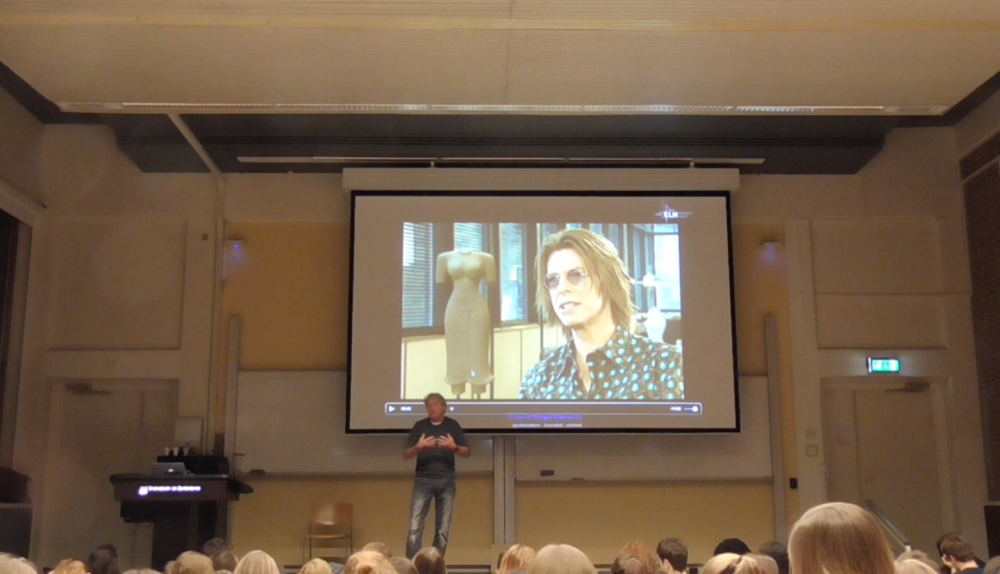
Analyzing body language.
Movements can be measured, defined and verified based on existing research.
In forensic analysis, a gesture, gaze, timing and micro-movements can be structured and measurable; any non-verbal item is a numerical calculation based on correct observation technique.
An expert in this field analyses videos, any available photo and creates a report in an exact time-line. The work is done purposeful and precisely and is extremely time-consuming. The analysis follows defined protocols like consistent coding schemes (e.g., FACS – Facial Action Coding System, cross-referencing video angles when available, creating a detailed chronological timeline.
Gestures, gaze, timing, and micro-movements can be structured and measurable
Hand movements can be counted and time-stamped. Gaze direction can be traced.
Body posture shifts can be quantified. Blink rate, pauses, and head movements can be measured. These metrics can be extracted precisely, especially with frame-by-frame tools.
Observations can be precise — but interpretations never reach 100% certainty
It is possible to measure a shoulder movement exactly and time a blink down to the frame.
But the meaning of the movement never has zero ambiguity.
Example: pressed lips is measurable but why it happened can have multiple possible causes: concentration, suppression of speech, stress, dry lips or habit. It is i to scientifically eliminate all non-psychological explanations.
Body language is not a lie detector.
Even perfect observation has interpretation limits. The underlying mechanisms involve:
cognitive load, emotional state, cultural variation, individual baselines, context-dependent meanings. All introduce variability that prevents 100% certainty.
See also: Forensic Non-Verbal Behavior Analysis
Courses

Practitioner Online Course:
• Duration: 25 hours spread over 5 to 6 half day.
• Content and meaning of body language in
- Online course, individual or in groups.
Costs: €1900 per person.
Group rate from 6 participants: €1500 per person.
ELN Workshops, masterclasses & lectures
Copyright © 2016 -2026 - Expertisecentrum Lichaamstaal Nederland ® - All Rights Reserved